Unlike Thanksgiving, Friendsgiving has no rules. It is usually a potluck, often in a small flat, with a mix of chairs that do not match and a table that is slightly too small. That is not a problem to solve — it is the whole charm. The best Friendsgiving tables look gathered, not staged.
These ideas are all about the table and the room around it — settings, centrepieces, lighting, and the small styling touches that make a potluck feel like a party. There are no recipes here; the food is your friends' job. Yours is to make the table beautiful.
Start with the feeling, not the shopping list
Before you buy anything, decide the feeling: warm and rustic (wood, linen, candles, autumn leaves), modern and simple (white plates, greenery, one colour accent), or colourful and joyful (mixed plates, bright napkins, lots of candles). Pick one. A table with one clear feeling always looks better than a table with five ideas competing. For a small flat, warm and rustic is the easiest — it forgives mismatched plates and chairs, and it looks better the more lived-in it is.
Table settings that welcome people
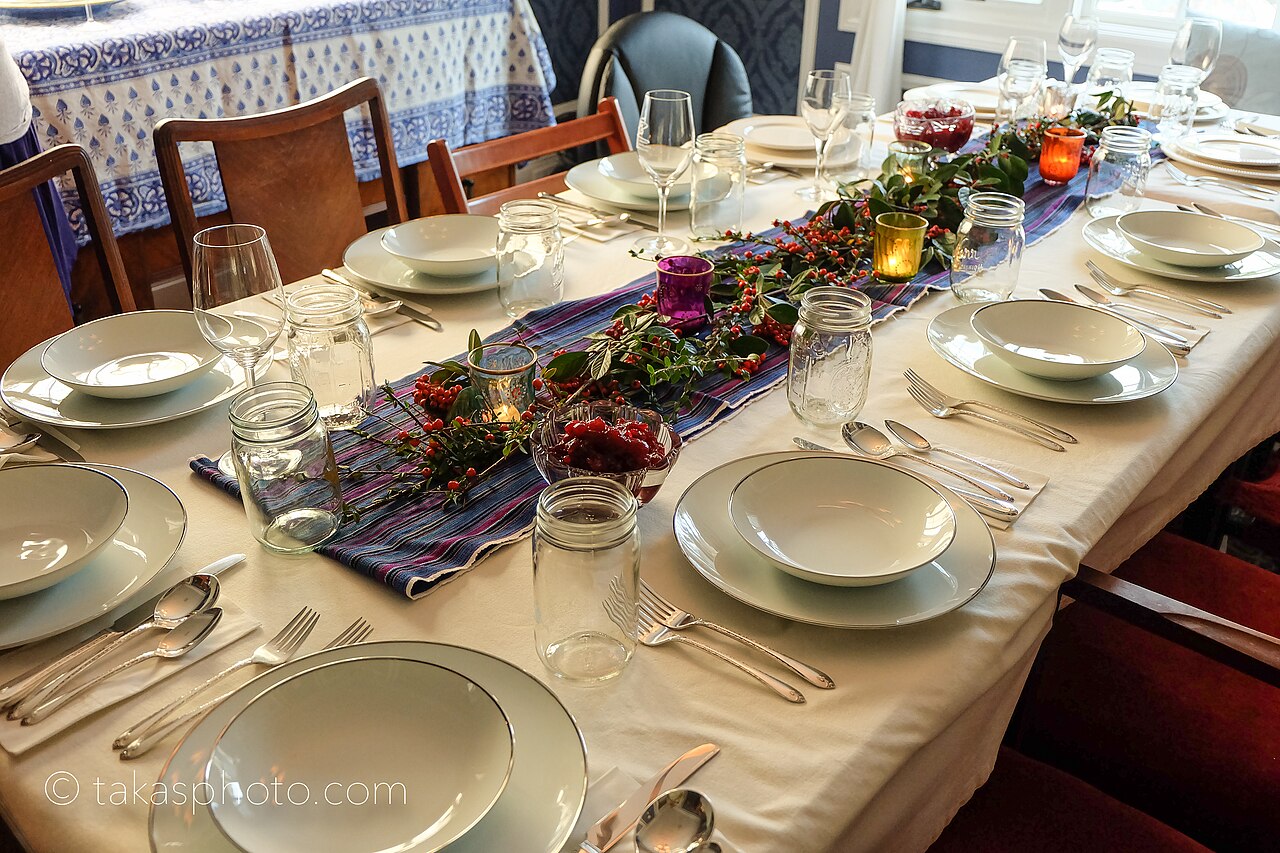
- Layer the table. A tablecloth or runner, then placemats or chargers, then plates. Layers are what make a table look styled rather than just set. A plain linen-look runner over a bare wood table is enough to start.
- Mix, do not match. Friendsgiving is the one party where mismatched plates are correct. Mix your plates, your glasses, your chairs — it looks generous and relaxed, and it means you do not need to buy a matching set.
- Cloth napkins, tied simply. A cloth napkin tied with twine, with a sprig of rosemary or a small autumn leaf tucked in, costs almost nothing and makes every place setting feel considered.
- Handwritten place cards. A small card with each friend's name — handwritten on brown card, or on a leaf with a marker — does two jobs: it tells people where to sit, and it tells them they were expected.
- One glass per person, kept simple. You do not need three glasses each. One good glass for drinks and a mug for something warm afterwards is plenty, and it keeps a small table from feeling crowded.
Centrepieces for a table that also holds food
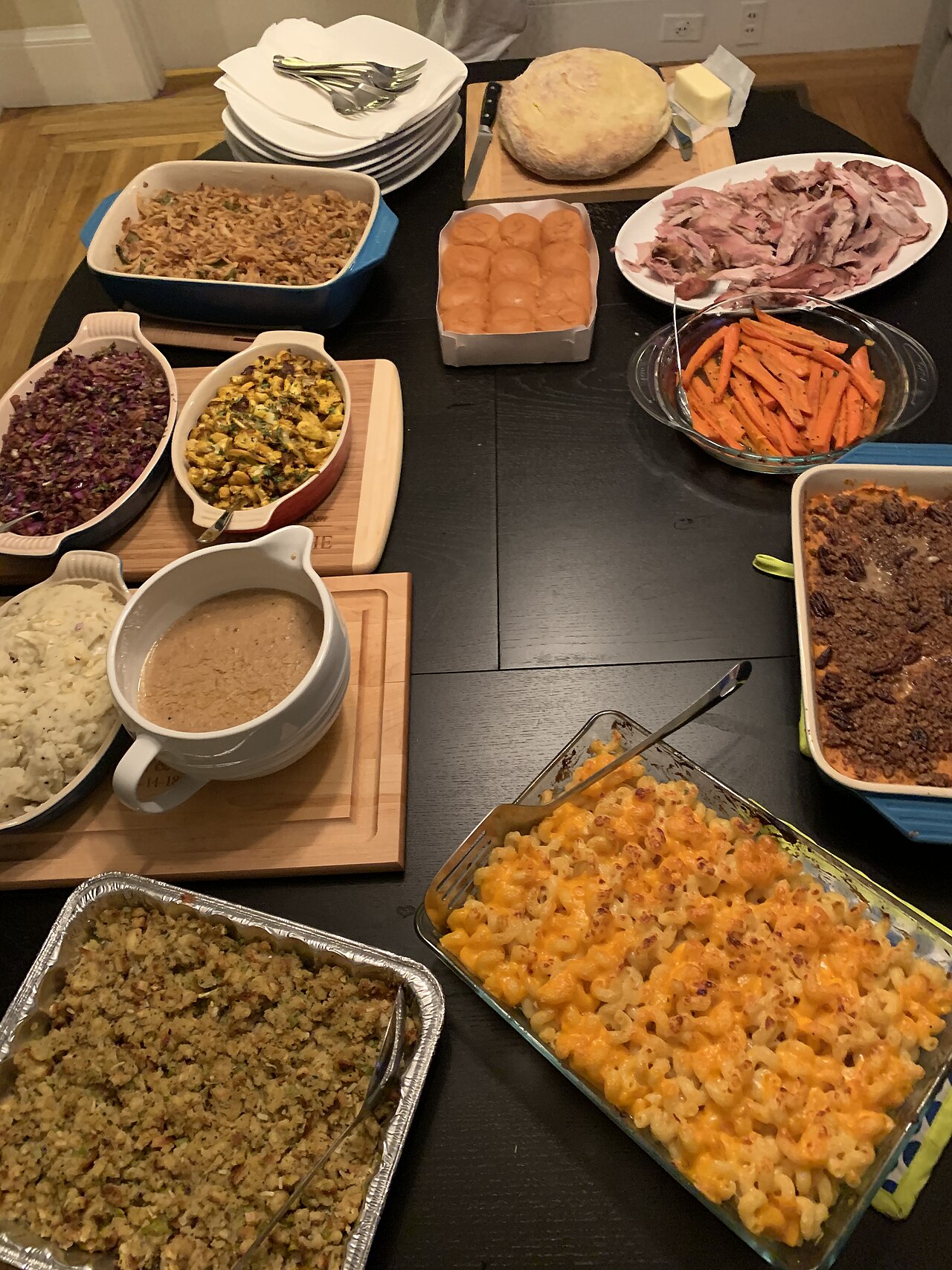
The golden rule of a Friendsgiving centrepiece is that it must be low and narrow. A potluck table needs room for dishes, and guests need to see each other across it. A tall arrangement is beautiful in a photo and miserable at dinner. Keep everything under about 30 centimetres high and down the centre of the table, and leave the ends and sides clear for food.
- A greenery runner. Lay eucalyptus, olive branches, or autumn leaves down the centre of the table as a living runner. It costs very little, it smells wonderful, and it makes the table look abundant before any food arrives.
- Pumpkins, small and real. Three or four mini pumpkins in white, orange, and green, spaced along the centre. Real mini pumpkins cost very little and they are the most autumn thing you can put on a table.
- Candles in a row. A line of candles down the centre — different heights, in jars or simple holders — is the single most effective Friendsgiving decoration. Battery candles are the sensible choice when the table is crowded and people are reaching across it.
- A bowl of fruit. A wooden bowl of apples, pears, and a few autumn leaves is a centrepiece you can eat afterwards. It is the oldest trick in the book and it still works.
- Let the food be the decoration. At a potluck, the dishes are the prettiest thing on the table. Style the table simply — linen, candles, greenery — and let the food provide the colour.
Styling the room around the table
- Light the room low. Turn off the ceiling light and use lamps, candles, and fairy lights instead. Low, warm light makes a small room feel intimate and a big group feel close.
- A drinks station away from the table. Put drinks, glasses, and a few snacks on a sideboard or a kitchen counter so people are not crowding the table. It also gives guests somewhere to stand and talk before dinner.
- Music, quietly. A low playlist — acoustic, jazz, or just something warm — fills the gaps and sets the mood. Keep it quiet enough that nobody has to raise their voice.
- A photo corner. One corner with a simple backdrop — a plain wall, a string of lights, a few pumpkins — where people can take photos. It costs nothing and it is where the best memories of the night come from.
- Make room for the extra chair. Someone always brings a friend. Keep one spare chair and one spare place setting ready, and the evening will feel generous instead of stressed.
Budget styling for a small flat
Friendsgiving styling does not need a budget. A runner ($10), candles you already own, greenery from the garden or a grocery bunch ($5), mini pumpkins ($5), and handwritten place cards (free) will style a whole table for about $20. Borrow plates and chairs from friends if you need more — a potluck party is the one occasion where borrowing is the tradition. Spend your money on one thing that matters to you — a good tablecloth, a set of cloth napkins, or a candle you love — and keep the rest simple.
After dinner: the table becomes the party
Seating a crowd in a small flat
The hardest part of Friendsgiving in a small flat is not the food — it is the chairs. Here is how to seat eight people at a table made for four. First, borrow, do not buy: ask friends to bring a chair each, or borrow folding chairs from a neighbour. Second, use a bench or a pouffe on one side — two people fit on a bench where two chairs would never fit. Third, let the living room help: a coffee table at sitting height with cushions on the floor works for dessert and drinks, even if dinner is at the table. Fourth, stagger the courses: if not everyone can sit at once, serve starters standing up with drinks, then sit for the main meal. Nobody remembers whether they sat on a matching chair. They remember whether they felt welcome — and a host who planned for the extra chair always feels welcoming.
A simple timeline for the day
Friendsgiving runs itself if you plan the day in four blocks. Morning: set the table, lay the runner, put out candles and the centrepiece, and clear the drinks station. Two hours before: put on music, light the candles, and put the first snacks out. When guests arrive: take coats, offer a drink, and let people stand and talk — do not rush anyone to the table. Dinner: sit down, eat slowly, and let the food arrive as it is ready. Potluck means dishes arrive at different times, and that is fine. The timeline that matters is not the food — it is the feeling. If the table is set, the lights are low, and the host is relaxed, the party is already a success.
Do not clear the table the moment dinner ends. Push the dishes to one end, bring out dessert and coffee, and let people stay. The best part of Friendsgiving is the hour after the meal, when the table is a mess, the candles are low, and nobody wants to leave. Style the table for that hour, not just for the photograph before dinner.
Frequently asked questions
What is the difference between Friendsgiving and Thanksgiving decor?
Friendsgiving is more relaxed and personal. There are no formal traditions, so the styling can be rustic, modern, or colourful — whatever suits your friends. Mismatched plates and a potluck table are part of the charm.
How do I decorate a small table for Friendsgiving?
Keep the centrepiece low and narrow so there is room for food and guests can see each other. A greenery runner, a row of candles, and a few mini pumpkins are enough for a small table.
What should I put on a Friendsgiving table on a budget?
A plain runner, candles, greenery, mini pumpkins, and handwritten place cards will style a whole table for about $20. Borrow extra plates and chairs from friends if you need them.
How many candles are safe on a crowded dinner table?
Use battery candles if the table is crowded and people are reaching across it. If you use real candles, keep them in jars or holders, away from napkins and sleeves, and never leave them unattended.
What colours work best for Friendsgiving table decor?
Warm autumn colours: cream, rust, gold, deep green, and wood tones. Pick two or three and repeat them across the runner, napkins, and centrepiece for a pulled-together look.